Understanding India’s New Labour Codes: Key Changes and Their Impact
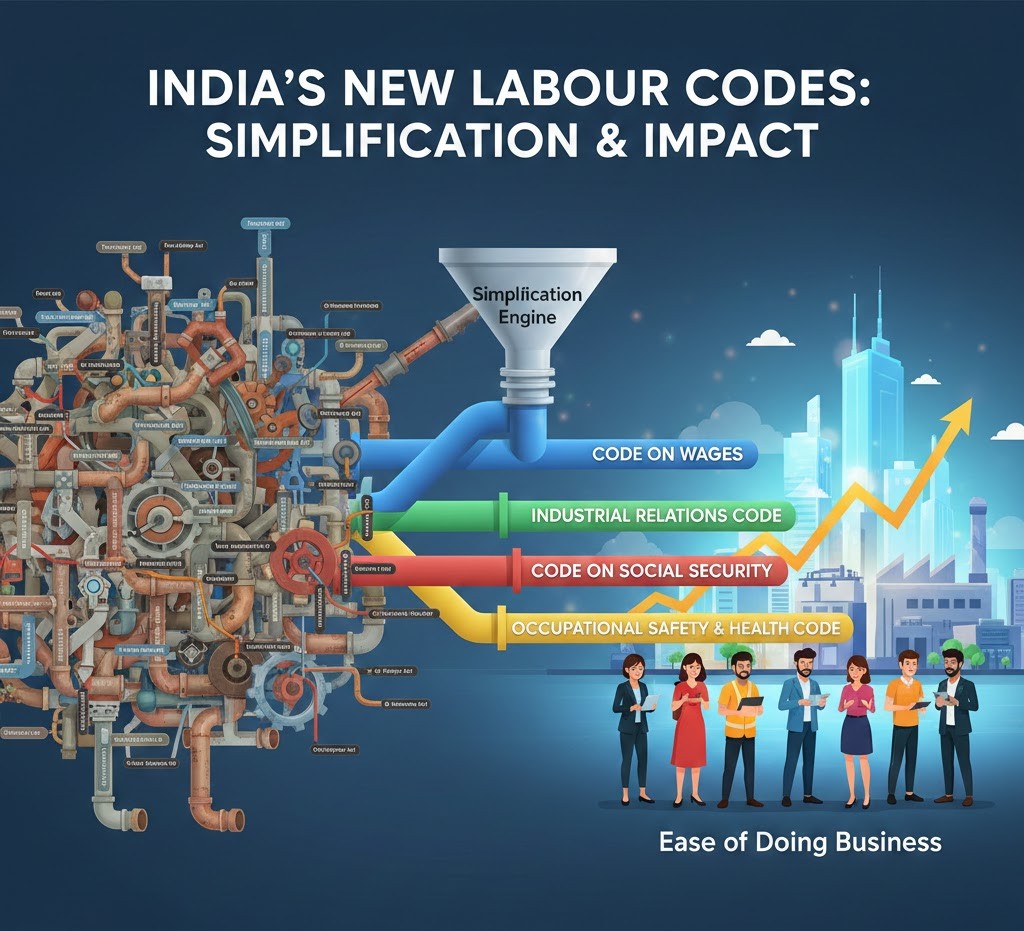
India has officially implemented its long-awaited labour reforms by bringing all four Labour Codes into force. These Codes consolidate 29 existing labour laws into a simplified, modern framework aimed at improving ease of doing business while enhancing worker protection. The comprehensive changes span wages, industrial relations, safety, working conditions, and social security—making this one of the largest labour reforms in independent India.
Below is a clear overview of the major components and what they mean for businesses and employees.
1. A Unified and Modernised Labour Framework
The four new Labour Codes—Code on Wages, Industrial Relations Code, Social Security Code, and Occupational Safety, Health and Working Conditions (OSH) Code—have replaced multiple overlapping laws with a single, harmonised structure. This reform brings consistency in definitions, processes, and compliance across industries and states.
A key highlight is the uniform definition of wages, which will now be used for calculations relating to PF, gratuity, bonus, ESIC, and other statutory contributions. This brings transparency and prevents manipulation of salary structures.
2. Major Provisions Coming Into Effect
The implementation of the Codes activates several important provisions that directly affect how organisations hire, pay, and manage employees:
- Mandatory Appointment Letters: Employers must issue appointment letters to all employees, clearly detailing job roles, wage structure, working hours, and employment terms.
- Timely Wage Payment: Delayed wage payments are no longer acceptable; timely payment is now a legal obligation.
- Universal Social Security Coverage: For the first time, gig workers, platform workers, and freelancers fall under the social security ecosystem, enhancing long-term financial protection.
- Annual Health Check-ups: Required for certain categories of employees, particularly those over a specified age.
- Night Shift Permission for Women: Women employees can work night shifts with their consent, as long as employers provide safety measures and transport arrangements.
- Gratuity After One Year for Fixed-Term Employees: Fixed-term workers now get gratuity after just one year of service, a major shift towards benefit parity.
- Single Licence, Registration, and Return: A unified compliance framework eliminates multiple state and central filings.
- Overtime at Double Wages: Any work beyond prescribed hours must be paid at twice the normal wage rate and requires employee consent.
These provisions are aimed at strengthening worker rights while offering organisations a simplified and predictable compliance structure.
3. Industry Response and Implementation Challenges
The business community has largely welcomed the reforms. Companies appreciate the reduced compliance burden, clarity in wage definitions, and streamlined registration processes. The new Codes also support flexible employment models such as fixed-term employment, which many industries find beneficial.
However, the transition is not without challenges. States are required to notify their own rules to operationalise the Codes, and many are still in the process of aligning their frameworks. Organisations will need to upgrade internal HR, payroll, and compliance systems to reflect the updated wage definitions, overtime rules, and digital reporting requirements. Meanwhile, trade unions have raised concerns about job security provisions and potential gaps in the coverage of informal workers.
4. What This Means for Workers, Employers, and States
For workers, the Codes offer more formalisation, timely wage payment, improved safety standards, and better access to social security. Gig workers—one of India's fastest-growing workforce segments—now have a clear pathway to structured benefits.
For employers, the reforms streamline compliance and provide greater operational flexibility. But businesses will need to adapt to higher obligations in areas like gratuity, PF, and safety norms, particularly with the standardisation of the wage definition.
For states, successful implementation will depend on creating robust digital systems, issuing timely notifications, and ensuring smooth integration with central processes.
Labour Codes – Official Clarification by Union Labour Secretary
Union Labour Secretary Vandana Gurnani has confirmed that although the Labour Codes have come into effect, the Central Rules are going through the final mandatory process:
🔹 Pre-publication of Rules will happen next week.
🔹 A 45-day comment period will be opened for all stakeholders.
🔹 After receiving comments, the Govt will require 30–45 days to examine suggestions and finalise the Rules.
🔹 This process is legally required before rules can be enforced fully.
⏳ Expected timeline: 2.5 to 3 months
Post this, the final Central Rules under all four Labour Codes will be officially notified.
Conclusion
The New Labour Codes mark a transformative turning point for India’s labour landscape. By unifying fragmented laws, expanding social security, strengthening worker protection, and simplifying compliance, the government aims to build a more modern, transparent, and balanced employment ecosystem. The impact will unfold over time, but the direction is clear—India is moving towards a labour regime that aligns with global standards while supporting both economic growth and workforce welfare.