



📍 Pune, Maharashtra | Chartered Accountants

📍 Pune, Maharashtra | Chartered Accountants

Leading Chartered Accountant Firm in Pune

Welcome to

Chartered Accountants – Mittal & Co.

Mittal & Co. is a professionally managed Chartered Accountancy firm based in Pune, providing comprehensive tax, accounting, audit, and compliance services.

We assist individuals, professionals, startups, SMEs, and established businesses with practical solutions designed to meet regulatory requirements and support long-term growth.

Our approach is client-focused, transparent, and driven by accuracy—ensuring peace of mind in all financial and compliance matters.

Our Services

We offer reliable tax, accounting, and compliance services designed to simplify your financial responsibilities.

Audit and Assurance Services

Professional audit services to ensure compliance, transparency, and credibility in financial reporting.

NRI & Expatriate Taxation Services

Trusted NRI tax advisory for India–global compliance. Filing, planning, DTAA & FEMA handled by experienced CAs.

Accounting & Bookkeeping Services

Compliance-ready accounting & bookkeeping for businesses in Pune. Trusted CA firm. Clear numbers. Zero stress.

GST Registration & Filing Services

End-to-end GST registration, returns, compliance, and advisory support.

Corporate & Business Taxation Services

Strategic tax planning and compliance solutions tailored to corporate entities.

Accounting & Bookkeeping Services

Accurate accounting and bookkeeping to maintain clear and compliant financial records.

Our Office Environment

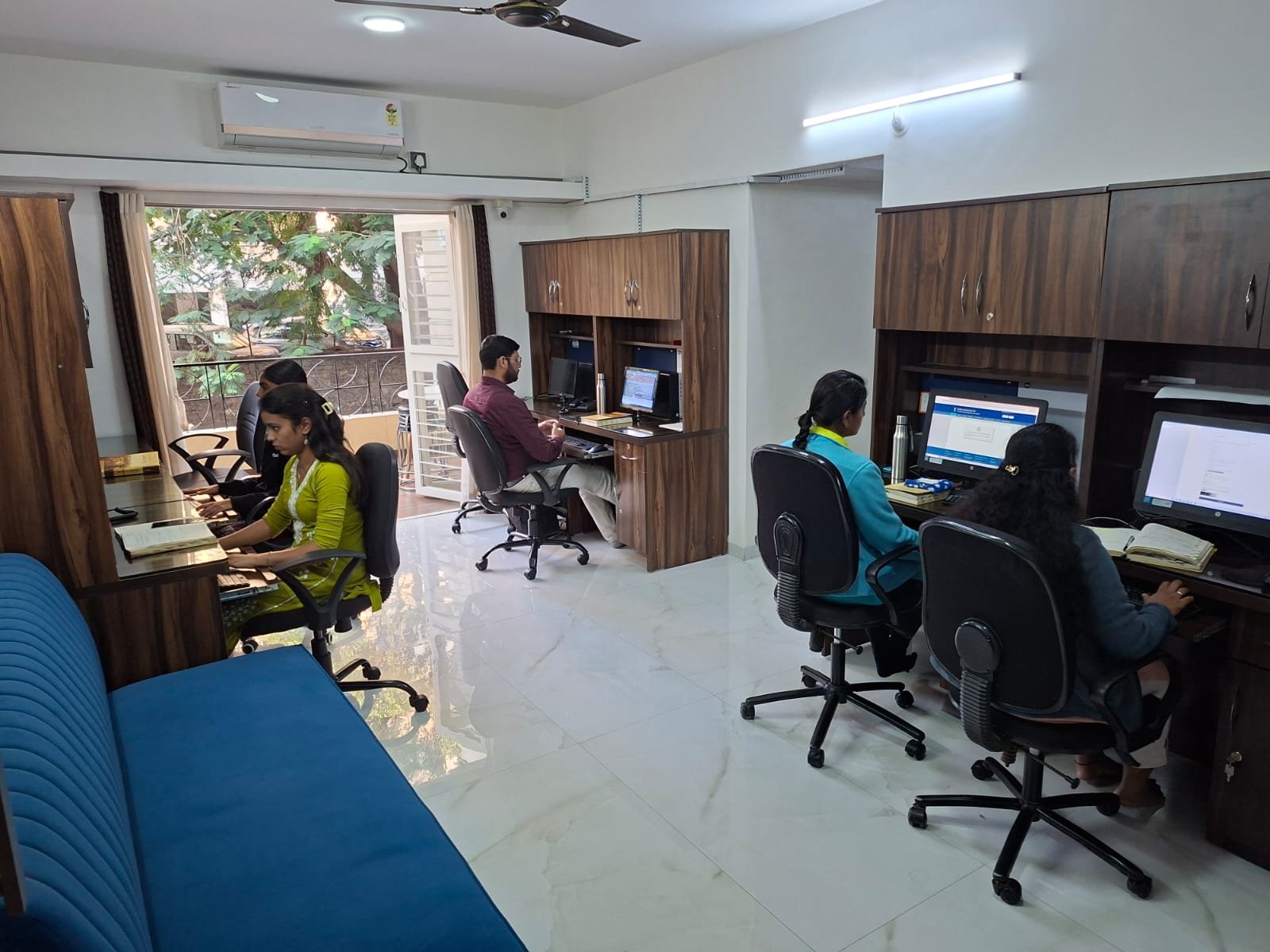
Our Pune office provides a professional and confidential environment where clients can comfortably discuss tax, accounting, and compliance matters.
We ensure data security, privacy, and clear communication at every stage of our engagement.

Your Trusted Tax Partners

As your trusted tax partners, we provide reliable guidance and comprehensive solutions across tax, GST, and accounting services.

What Our Clients Say About Mittal & Co.

Looking for a ReliableChartered Accountant in Pune?

Get expert assistance in Income Tax, GST, Accounting, and Business Compliance with complete accuracy and transparency.​

Missed reporting Foreign Assets in ITR? Here is Foreign Assets of Small Taxpayers Disclosure Scheme, 2026

A Complete Guide for Taxpayers Introduction Many Indian taxpayers hold a foreign bank account, an inherited property abroad, a handful of foreign shares, or income earned overseas — and, often without any intent to evade tax, never got around to reporting it in their Indian income-tax return. Under the existing law, such gaps fall within the reach of the Black Money (Undisclosed Foreign Income and Assets) and Imposition of Tax Act, 2015 (the Black Money Act), which was designed to deal with serious concealment and carries correspondingly severe consequences. Recognising that a large number of these cases involve modest amounts and unintentional lapses rather than deliberate evasion, the government has introduced the Foreign Assets of Small Taxpayers Disclosure Scheme, 2026 (FAST-DS) — a one-time voluntary disclosure window under Chapter IV (sections 130 to 144) of the Finance Act, 2026, backed by the Foreign Assets of Small Taxpayers Disclosure Scheme Rules, 2026, notified by the CBDT on 14th August 2026. It lets eligible taxpayers come forward, declare the asset or income, pay a specified amount, and walk away with immunity — without going through the far harsher Black Money Act route. Quick Details Particular Detail Legal basis Sections 130–144, Chapter IV, Finance Act, 2026, read with the FAST-DS Rules, 2026 Date of commencement 16th August 2026 Last date to file declaration 31st December 2026 (no extensions contemplated) Valuation date 31st March 2026 Declaration form Form 1, filed electronically Administering authority Principal Director General / Director General of Income-tax (Systems) Monetary ceiling — undisclosed asset/income ₹1 crore Monetary ceiling — reporting lapse on already-taxed asset ₹5 crore Amount payable — undisclosed asset/income 30% tax + equal additional amount (effectively 60%) Amount payable — reporting lapse Flat ₹1 lakh   Who Must Take Benefit of This Scheme FAST-DS is aimed squarely at what its name suggests — small taxpayers, not large-scale concealment cases. You should seriously consider using this Scheme if you fall into any of these situations: You hold a foreign bank account, foreign property, foreign shares or securities, jewellery, or any other asset located outside India, and never reported it in any Indian tax return. You earned income from a source outside India — interest, rent, dividends, capital gains, or otherwise — that was taxable in India but was never offered to tax. You did report a foreign asset in your books or elsewhere, or it was acquired while you were a non-resident, but it never made it into the specific foreign-assets schedule of your income-tax return. You are worried about a past lapse being picked up later — for instance through automatic exchange of financial account information between countries — and want to regularise your position on your own terms rather than waiting to be caught.   In each of these cases, coming forward voluntarily under FAST-DS is almost always preferable to the alternative of the tax department discovering the gap independently, because the Scheme trades a fixed, known cost today for the open-ended exposure of tax, penalty and possible prosecution later. Applicability Who can declare You qualify as an eligible “assessee” if you are resident in India (under section 6 of the Income-tax Act) for the relevant previous year, or if you are currently a non-resident or resident-but-not-ordinarily-resident (RNOR) but were resident in India either in the year the income relates to or the year the asset was acquired. A change in your residential status since then does not disqualify you. When it applies A declaration is available where you failed to furnish a return altogether, failed to disclose the asset or income in a return you did file before the Scheme commenced, or where the asset or income would otherwise be treated as having escaped assessment under section 147 of the Income-tax Act. Monetary thresholds Applicability splits into two tracks, and you must check the one relevant to you: Track 1: An undisclosed foreign asset or undisclosed foreign income that was never offered to tax — available only where the combined value does not exceed ₹1 crore as on the valuation date. Track 2: A foreign asset already offered to tax, or acquired while you were non-resident, but not declared in the relevant schedule of the return — available only where the aggregate asset value does not exceed ₹5 crore.   Cross the applicable ceiling and the Scheme is unavailable for that declaration entirely; there is no scaled-down benefit. Where it does not apply, regardless of value The Scheme is off the table if the income or asset represents proceeds of crime with proceedings already initiated or pending under the Prevention of Money-Laundering Act, 2002, or if assessment proceedings for that year have already been completed under the Black Money Act, 2015. Determination of Tax Liability Track 1 — undisclosed asset/income The amount payable is the aggregate of tax at 30% of the declared value, plus a further amount equal to that tax — effectively a 60% levy on the total. Illustration: Description Value / Income Tax (30%) Additional 100% of tax Total payable Foreign bank account ₹60 lakh ₹18 lakh ₹18 lakh ₹36 lakh Foreign income ₹20 lakh ₹6 lakh ₹6 lakh ₹12 lakh Total   ₹24 lakh ₹24 lakh ₹48 lakh   Track 2 — reporting lapse The amount payable is a flat ₹1 lakh, irrespective of whether the asset is worth ₹50 lakh or the full ₹5 crore ceiling. Valuing the asset Everything is valued as on 31st March 2026. As a general rule, fair market value is the higher of the original cost of acquisition and the open-market price on the valuation date (ideally backed by a recognised valuer’s report); where no such valuation is done, the indexed cost of acquisition applies instead. Foreign bank accounts follow a distinct rule — value is the sum of all deposits made into the account since it was opened, up to the valuation date, excluding amounts that are really a withdrawal being redeposited, and excluding deposits already covered by an earlier Black Money Act declaration. Paying

Read More »

Depreciation Under the Income Tax Act: A Complete Guide to the Block of Assets

Understanding block-wise WDV computation, additions, sales, and when a block ceases to exist Depreciation is one of the most useful deductions available to a business, and once you understand how the block of assets system works, calculating it becomes refreshingly straightforward. Unlike the Companies Act, which tracks depreciation asset-by-asset, the Income Tax Act uses a simpler, more efficient block approach. This guide walks through the concept step by step, with worked examples, so you can apply it confidently to any client’s fixed asset schedule. 1. The Block of Assets Concept Section 2(11) of the Income Tax Act defines a ‘block of assets’ as a group of assets falling within the same class — tangible assets such as buildings, machinery, plant, or furniture, or intangible assets such as patents, copyrights, trademarks, licences, and franchises — for which the same rate of depreciation is prescribed. In practice, this means you do not depreciate each machine or vehicle individually. Instead, every asset eligible for the same rate is pooled into one block, and depreciation under Section 32 is computed on the written down value (WDV) of the block as a whole, not on individual assets. This has a few important consequences: Once an asset enters a block, it loses its individual identity for depreciation purposes. You do not need to track the WDV of each individual asset year after year — only the block’s combined WDV. Gain or loss on sale of an individual asset is generally not computed separately; it flows through the block (see Section 4). Good practice: maintain a fixed asset register with individual asset detail for internal control and audit purposes, even though the tax computation itself only needs block-level figures. 2. Rates and Classification of Blocks The Income Tax Rules (Appendix I) prescribe the rate applicable to each class of asset. A few commonly used rates are illustrated below — always verify the current rate against the latest Rules before filing, as rates and classifications are occasionally revised. Block Illustrative Assets Rate of Depreciation Building (residential) Staff quarters, residential buildings 5% Building (non-residential) Factory, office premises 10% Furniture and fittings Furniture, fixtures 10% Plant and machinery (general) General plant and machinery 15% Motor vehicles (general use) Cars, vans not used in a hiring business 15% Computers, including software Computers, laptops, software 40% Intangible assets Patents, trademarks, licences, franchises 25% 3. Computing Depreciation: The Basic WDV Formula Depreciation for the year is computed on the WDV of the block as at the beginning of the year, adjusted for additions and deletions during the year: Depreciation = Rate × [Opening WDV of block + Cost of assets acquired during the year − Sale consideration/moneys receivable for assets sold, discarded, or destroyed during the year] This adjusted figure — opening WDV plus additions minus deletions — is what the Act calls the WDV of the block as on the last day of the previous year, and it is this figure to which the rate is applied. 4. Additions During the Year — the 180-Day Rule When a new asset is added to a block during the year, the depreciation allowed depends on how long it was used in that year: Asset put to use for 180 days or more in the year of acquisition: full year’s depreciation at the normal rate. Asset put to use for less than 180 days in the year of acquisition: depreciation restricted to 50% of the normal rate, for that year only. The 180-day test looks only at the date the asset is put to use, not the date of purchase or invoicing. From the following year onward, the asset merges fully into the block and the 180-day restriction no longer applies — the full rate is charged on the entire block WDV, addition included. 5. Sale, Discarding, or Destruction of an Asset — Effect on the Block When an asset within a block is sold, discarded, demolished, or destroyed during the year, the moneys payable in respect of it (sale price, insurance/scrap value, compensation, etc.) are simply deducted from the block’s WDV before applying the rate — there is no separate gain or loss computed on that individual asset, so long as the block continues to exist and has a positive balance after the deduction. This is one of the most useful features of the block system for a growing business: selling an old machine at a profit or loss over its individual book value does not, by itself, trigger a taxable event. The sale proceeds simply reduce the pool on which future depreciation is calculated. 6. Illustrative Example — Additions and Deletions in the Same Block Consider a Plant and Machinery block (rate 15%) for a manufacturing client for FY 2025-26: Particulars Amount (₹) Opening WDV as on 1 April 2025 50,00,000 Add: New machine purchased and used from 10 June 2025 (used > 180 days) 12,00,000 Add: New machine purchased and used from 5 January 2026 (used < 180 days) 6,00,000 Less: Sale proceeds of an old machine sold in August 2025 (4,00,000) WDV before depreciation 64,00,000 Because the 180-day rule applies asset-by-asset only in the year of addition (not to the block as a whole), depreciation is split into two components for the current year: Component Base (₹) Rate Applied Depreciation (₹) Opening WDV + additions used ≥ 180 days, less deletions 50,00,000 + 12,00,000 − 4,00,000 = 58,00,000 15% 8,70,000 Addition used < 180 days 6,00,000 7.5% (half rate) 45,000 Total depreciation for FY 2025-26 9,15,000 Closing WDV carried forward to FY 2026-27 = ₹64,00,000 − ₹9,15,000 = ₹54,85,000. From next year, this entire figure is treated as a single opening WDV, and the half-rate addition loses its special treatment entirely. 7. When the Block Ceases to Exist — the ‘Block Deleted’ Concept A block can come to an end in two distinct situations, and it is important to tell them apart correctly: (a) All assets in the block are sold, but sale proceeds are less than or equal to

Read More »

F&O Trading and Income Tax: A Complete Guide for Traders Understanding tax treatment, audit applicability, turnover computation and ITR disclosure for Futures & Options income — AY 2026-27 If you trade in the derivatives (Futures & Options) segment, the good news is that Indian tax law treats this activity clearly and consistently as business income — not as some grey area you need to worry about. Once you understand a handful of core rules, F&O taxation becomes very manageable, even if you have never filed a business return before. This guide walks you through everything you need: what F&O is, how it is taxed, when a tax audit applies, how to calculate turnover and profit correctly, the accounting treatment, tax computation, loss set-off rules, and exactly how to disclose it all in your ITR. 1. What is F&O Trading? Futures and Options (F&O) are derivative instruments whose value is derived from an underlying asset — typically a stock index or an individual stock. A future is a standardised contract to buy or sell the underlying at a predetermined price on a future date. An option gives the buyer the right, but not the obligation, to buy (call) or sell (put) the underlying at a fixed strike price before expiry, in exchange for a premium. F&O contracts are cash-settled in India and are used both for hedging existing positions and for speculating on price movements. Because they are traded on recognised stock exchanges (NSE/BSE) through a broker, and settlement happens without actual delivery of the underlying shares, the Income-tax Act carves out specific — and favourable — treatment for them. 2. Tax Treatment of F&O Income This is the single most important thing to get right: F&O transactions are specifically excluded from the definition of a ‘speculative transaction’ under the proviso to Section 43(5) of the Income-tax Act, because they are executed on a recognised stock exchange. As a result, income or loss from F&O trading is taxed as Profits and Gains of Business or Profession (PGBP) under the head ‘Non-Speculative Business Income’. This single classification carries several practical benefits for you as a trader: Taxed at your normal slab rate — there is no separate concessional rate as with capital gains. Full deduction is allowed for genuine business expenses — brokerage, STT, exchange transaction charges, internet and data charges, advisory fees, and a proportionate share of rent, telephone or salary if directly attributable to trading. A loss can be set off against almost any other head of income (except salary) in the same year, and carried forward for 8 assessment years. It is reported in ITR-3 (or ITR-4 if presumptive taxation is validly opted for), not in the capital gains schedule. Good to know • F&O is non-speculative, unlike intraday equity trading (which remains speculative business income under Section 43(5)). • Because it is non-speculative, F&O losses enjoy a much wider set-off window than intraday losses. 3. Tax Audit Applicability (Section 44AB) Many traders assume a tax audit is triggered only by very high turnover. In practice, the audit trigger for F&O depends on three separate tests, and it pays to check all three every year. 3.1 Turnover-based trigger Audit is mandatory once F&O turnover exceeds ₹10 crore, provided at least 95% of receipts and payments (by value) are through digital/banking channels — which is the norm for exchange-settled F&O, since brokers route funds through the bank. If the 95% digital condition is not met, the threshold drops sharply to ₹1 crore. 3.2 Presumptive taxation opt-out / low profit trigger If you declare profit below the prescribed presumptive rate (6% of turnover for digital transactions) under Section 44AD, and your total income exceeds the basic exemption limit, audit becomes mandatory under Section 44AB read with Section 44AD(4)/(5) — even if turnover is well below ₹1 crore. This is how many moderate-turnover traders unexpectedly fall into audit: not because turnover is high, but because a loss or thin profit is declared without opting for presumptive taxation properly. 3.3 The five-year presumptive lock-in trap Once you opt into Section 44AD in any year, the scheme is meant to be followed for five consecutive assessment years. If you opt out within that window and your total income exceeds the basic exemption limit in the opt-out year, audit is triggered again under Section 44AB(e), regardless of turnover. It is worth planning the in/out decision with a medium-term view rather than year to year. Situation Audit Required? Turnover up to ₹1 crore, no presumptive lock-in issue No Turnover between ₹1 crore and ₹10 crore, ≥95% digital No (subject to 3.2 and 3.3 above) Turnover above ₹10 crore Yes Profit below 6%/8% of turnover under Section 44AD, total income above exemption limit Yes Opted out of 44AD within 5-year lock-in, total income above exemption limit Yes Practical takeaway: don’t judge audit applicability on turnover alone — always check the profit percentage and your presumptive-scheme history for the last five years before finalising your position. 4. Calculation of Turnover and Profits F&O turnover is not the total value of contracts bought and sold — that figure would run into hundreds of crores even for a modest trader and bears no relation to actual business activity. Instead, turnover is computed using the method prescribed by the ICAI Guidance Note on Tax Audit (8th edition), which the Income-tax Department also follows. 4.1 The absolute profit method For every trade that is squared off (closed), calculate the profit or loss on that trade. Turnover = the sum of the absolute value of profits and losses across all closed trades — losses are added, not netted off, against profits. Under the current ICAI guidance, option premium received on sale is not added separately once it is already reflected in the net profit/loss of the closed position, which keeps turnover realistic and prevents artificial inflation. 4.2 Worked example Trade Result Trade 1 (Nifty futures) Profit ₹1,50,000 Trade 2 (Bank Nifty options) Profit ₹2,00,000 Trade 3 (Stock futures) Loss ₹1,50,000 Trade 4

Read More »

Presumptive Taxation Made Simple: A Complete Guide to Sections 44AD & 44ADA

Presumptive Taxation Made Simple: A Complete Guide to Sections 44AD & 44ADA For AY 2026-27 (FY 2025-26) — less paperwork, more clarity for small businesses and professionals If you run a small business or work in one of the specified professions, you don’t always need to maintain detailed books of account or go through a tax audit. The presumptive taxation scheme under Sections 44AD and 44ADA of the Income-tax Act exists precisely to keep compliance simple for taxpayers who qualify. Here’s a clear, practical walkthrough of how it works, who can use it, and what to watch out for. What Is Presumptive Taxation? Instead of computing actual profit by maintaining full books of account and getting them audited, eligible taxpayers can simply declare a fixed percentage of their turnover or receipts as taxable income. Tax is paid on this presumed income, and the rest of the receipts don’t need to be individually justified with bills or vouchers. It’s a genuinely lighter compliance path — provided you fit within the eligibility conditions. Three sections govern this scheme: Section 44AD for small businesses, Section 44ADA for specified professionals, and Section 44AE for those operating goods carriages. This guide focuses on the two most commonly used — 44AD and 44ADA. Applicability at a Glance Feature Section 44AD (Business) Section 44ADA (Profession) Section 44AE (Goods Carriages) Who it’s for Eligible resident individuals, HUFs and partnership firms (not LLPs) running an eligible business Specified professionals — CAs, doctors, lawyers, engineers, architects, interior designers, technical consultants, and similar notified professions Anyone owning up to 10 goods carriages at any time during the year Basic threshold Turnover up to ₹2 crore Gross receipts up to ₹50 lakh Based on number and type of vehicles, not turnover Enhanced threshold Up to ₹3 crore, if cash receipts and cash payments each stay within 5% of the respective totals Up to ₹75 lakh, if cash receipts stay within 5% of total receipts Not applicable Presumptive income 8% of turnover (6% on the portion received through banking/digital channels) 50% of gross receipts A fixed per-vehicle amount for the months owned in the year Books of account Not required if presumptive scheme is followed Not required if presumptive scheme is followed Not required if presumptive scheme is followed Tax audit Not required, unless declared profit falls below the prescribed rate and total income exceeds the basic exemption limit Not required, unless declared profit falls below 50% and total income exceeds the basic exemption limit Generally not applicable to this scheme   Section 44AD: Presumptive Taxation for Businesses Who can opt Resident individuals, resident HUFs, and resident partnership firms (excluding LLPs) carrying on an eligible business — other than a business already covered under Sections 44AE, agency business, or a business earning commission or brokerage. Turnover limits ₹2 crore — the basic threshold for any eligible business. ₹3 crore — available where cash receipts and cash payments during the year each remain within 5% of the total receipts and total payments respectively. Minimum profit to be declared 8% of turnover, where receipts are in cash. 6% of turnover, for the portion of turnover received through banking channels or digital modes (account payee cheque/draft, RTGS, NEFT, UPI, IMPS, credit/debit card, or other prescribed electronic modes). A taxpayer is always free to declare a higher profit than these minimums — the 6%/8% figures are floors, not fixed rates. Section 44ADA: Presumptive Taxation for Professionals Who can opt Resident individuals and resident partnership firms (excluding LLPs) carrying on a profession specified under Section 44AA(1) — this covers professions such as legal, medical, engineering, architectural, accountancy, technical consultancy, interior decoration, and certain other notified professions including film artists, authors, and IT/technology consultants. Gross receipts limits ₹50 lakh — the basic threshold. ₹75 lakh — available where cash receipts do not exceed 5% of total gross receipts for the year. Minimum profit to be declared 50% of gross receipts, regardless of the actual expenses incurred. If genuine profit margins run lower than 50%, it’s worth evaluating the regular books-of-account route instead, since 44ADA doesn’t allow separate expense deductions. Who Cannot Opt for These Schemes Non-resident individuals, HUFs, and firms. LLPs (Limited Liability Partnerships) — only regular partnership firms qualify. Businesses already governed by Section 44AE (goods carriages). Persons carrying on agency business, or earning income by way of commission or brokerage — for Section 44AD. Professionals not falling within the list specified under Section 44AA(1) — for Section 44ADA. Anyone claiming deductions under Sections 10A/10AA/10B/10BA or the Chapter VI-A deductions linked to specific business undertakings, to the extent those provisions require regular books. Conditions and Consequences of Opting The five-year lock-in under 44AD Once a taxpayer opts for Section 44AD in a given year, they’re expected to continue under the scheme for five consecutive assessment years. If, in any of those years, profit is declared below the prescribed 6%/8% rate — effectively opting out — the taxpayer is barred from re-entering Section 44AD for the following five assessment years. During those five disqualified years, if total income exceeds the basic exemption limit, a full tax audit under Section 44AB becomes mandatory, along with regular books of account. This is the single most important planning point to flag with clients before they opt in. When audit still applies For both 44AD and 44ADA, if the declared profit falls below the prescribed rate (6%/8% or 50%, as applicable) and total income exceeds the basic exemption limit, the presumptive route no longer shields the taxpayer from audit — Section 44AB applies, and Form 3CB-3CD must be filed. Advance tax Presumptive taxpayers under 44AD and 44ADA are required to pay their entire advance tax liability in a single instalment on or before 15th March of the financial year, rather than the usual quarterly schedule that applies to regular taxpayers. ITR Form and Disclosure Requirements Which form to file Taxpayers opting for Section 44AD or 44ADA generally file ITR-4 (Sugam), provided they don’t have income sources that require a different form (such

Read More »